Space Security

Doesn't Have

to be Boring.

NASA's Information and Communications Technology Supply Chain Risk Management (ICT SCRM) Service is an enterprise capability that delivers cyber SCRM services to the entire agency.

Visual Identity | Website | Strategy
2021 - Present

Merloom

Demystifying Privacy Policies and Corporate Practices

NASA's Information and Communications Technology Supply Chain Risk Management (ICT SCRM) Service is an enterprise capability that delivers cyber SCRM services to the entire agency.

UX Design | Visual Design
2024
‍

Merloom‍

Demystifying Privacy Policies and Corporate Practices

NASA's Information and Communications Technology Supply Chain Risk Management (ICT SCRM) Service is an enterprise capability that delivers cyber SCRM services to the entire agency.

2024 | UX Design | Visual Design - Scroll Down
2024

Merloom

Demystifying Privacy Policies and Corporate Practices

NASA's Information and Communications Technology Supply Chain Risk Management (ICT SCRM) Service is an enterprise capability that delivers cyber SCRM services to the entire agency.

UX Design | Visual Design
2024

The Story

It all started with a barrage of messages from my mom and girlfriend, asking "Is this a scam?" As their go-to tech guy, I found myself constantly analyzing screenshots of suspicious emails. But this soon revealed a bigger issue. Diving deeper, I noticed a troubling trend: spam and scams were on the rise, and people were struggling to understand how companies used their data.

Quick polls among friends, family, and strangers confirmed it – everyone felt overwhelmed by complex privacy policies and unsure how to protect their information. What began as helping family dodge phishing attempts evolved into a mission: to create a tool that demystifies digital privacy, empowering everyone to safeguard their online presence.

Statistical Context

6.8B

Known records have been breached in 2024.

70%

of consumers still feel that businesses are not doing enough to protect their personal information.

2,741

Known publicly disclosed incidents in 2024.

6 in 10

Nearly 6 in 10 Americans frequently skip reading privacy policies.

79%

Known publicly disclosed incidents in 2024.

81%

Of consumers would not be comfortable with AI assisting in data collection and analysis.

The Problem Statement

Everyday internet users need a way to easily understand and manage how companies use their personal data. Current policy agreements are often hard to understand, time-consuming to read, and difficult to act upon, leaving users feeling vulnerable and overwhelmed.

Research

Our Competitors

Permission Slip

App by Consumer Reports for automating privacy requests and data management. Provides automated privacy management, addressing similar concerns about data misuse and transparency.

Learn more
Reviews

4.21 | 933 reviews

50,000+ downloads

Permission Slip by CR has been downloaded 63 thousand times. Over the past 30 days, it averaged 29 downloads per day.

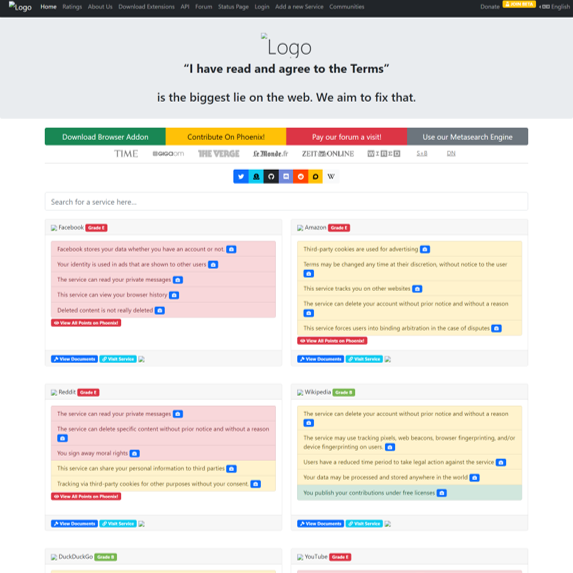
ToS;DR

Platform summarizing and rating terms of service and privacy policies. Simplifies complex legal documents, similar to our goal of making data privacy understandable and actionable.

Learn more
Analytics

Organic Traffic
6,100

Traffic Value
$266

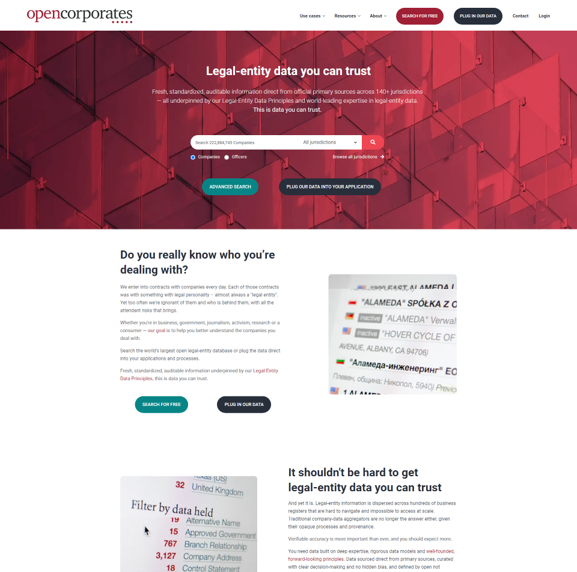
Opencorporate

Comprehensive database providing detailed information about companies worldwide. Offers transparency into corporate activities, similar to our focus on analyzing corporate policies and practices.

Learn more
SERVICES

Organic Traffic
6,100

Traffic Value
‍$162.2K

Research

User Interviews

Conducted 6 Zoom interviews, for 30 min. - 60 min., 4 with consumers and 2 with subject matter experts (SMEs).

Key Insights  - Consumers

Overwhelmed by Privacy Policies

Users find privacy policies difficult to understand and want more transparency about data collection and usage practices.

Apathy and Distrust

Users lose trust in companies after experiencing data leaks, spam calls, and negative news reports.

A Need for Simple Policy Agreements

Users want things to be clear and understandable. Why can’t policies be clearer and more actionable?

Information Just Feels Hidden

Whether its purposeful or not, users feel frustrated that corporate policies seem hidden and purposefully complicated.

Value Transparency

Users value transparency and honesty in companies, expecting them to be upfront about their practices and product contents.
Key Insights - Federal Cybersecurity SMEs

Navigating Complexity

SMEs struggle to obtain clear, transparent information from companies and supply chains, hindering effective risk assessment.

Too Much Legalese

Policies filled with legal jargon make it difficult for SMEs to quickly understand and act on potential risks.

Reactive and Not Proactive

Lack of clear information often forces SMEs into reacting to threats rather than proactively managing them.

Slow Ahh Government

Current federal policies are lagging behind rapid technological advancements, creating exploitable gaps.

Global Supply Chain Maze

Limited visibility in global supply chains poses significant risks, making it challenging to verify the security of each component.

"

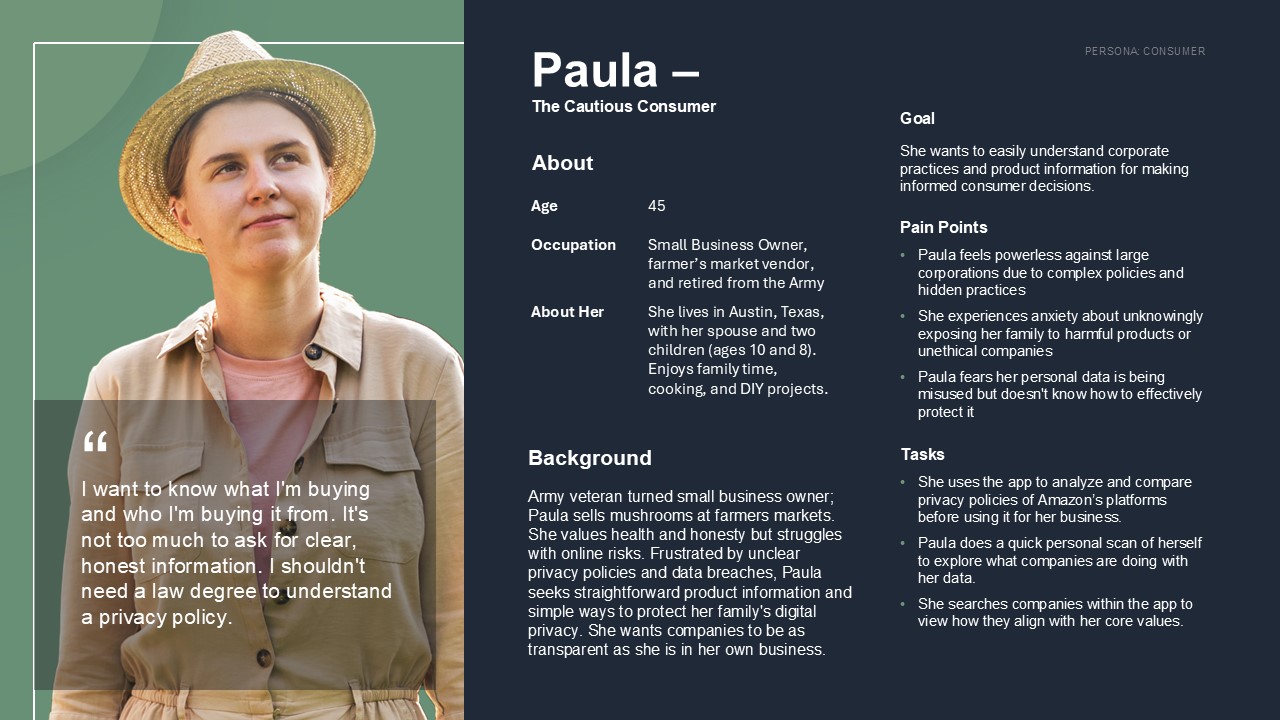
I want to know what I'm buying and who I'm buying it from. It's not too much to ask for clear, honest information. I shouldn't need a law degree to understand a privacy policy.

Research

Personas & Journey Maps

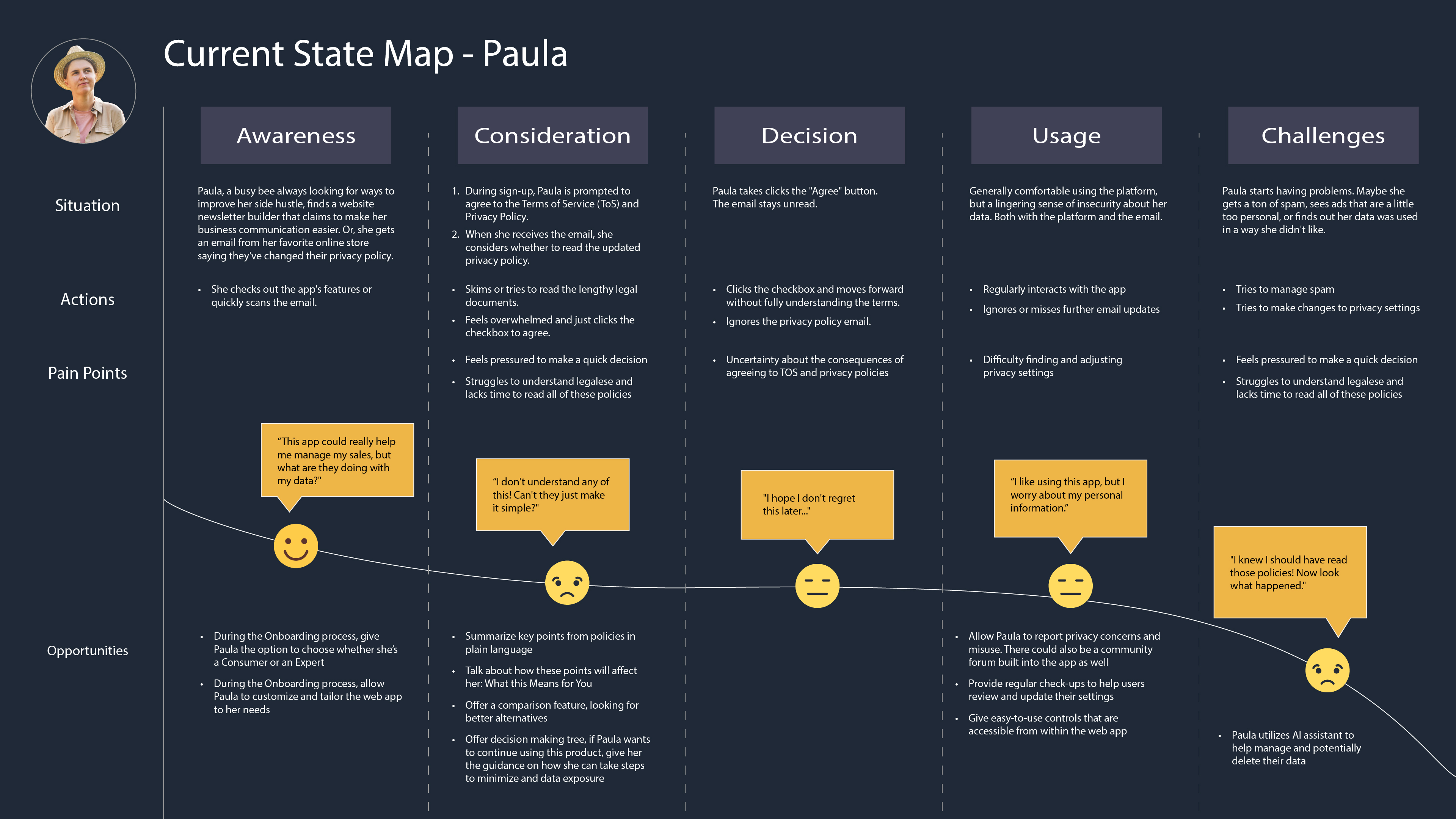
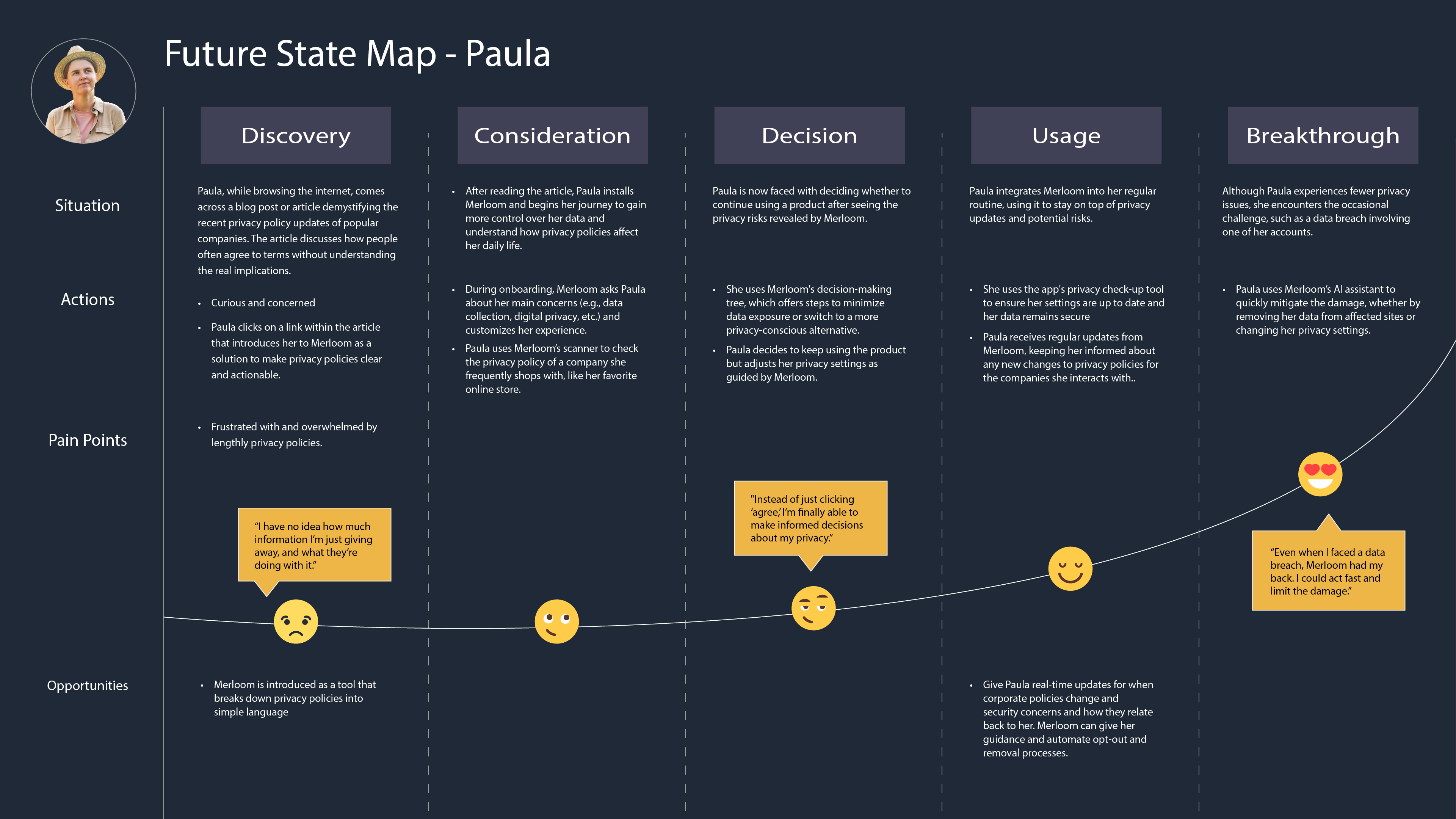
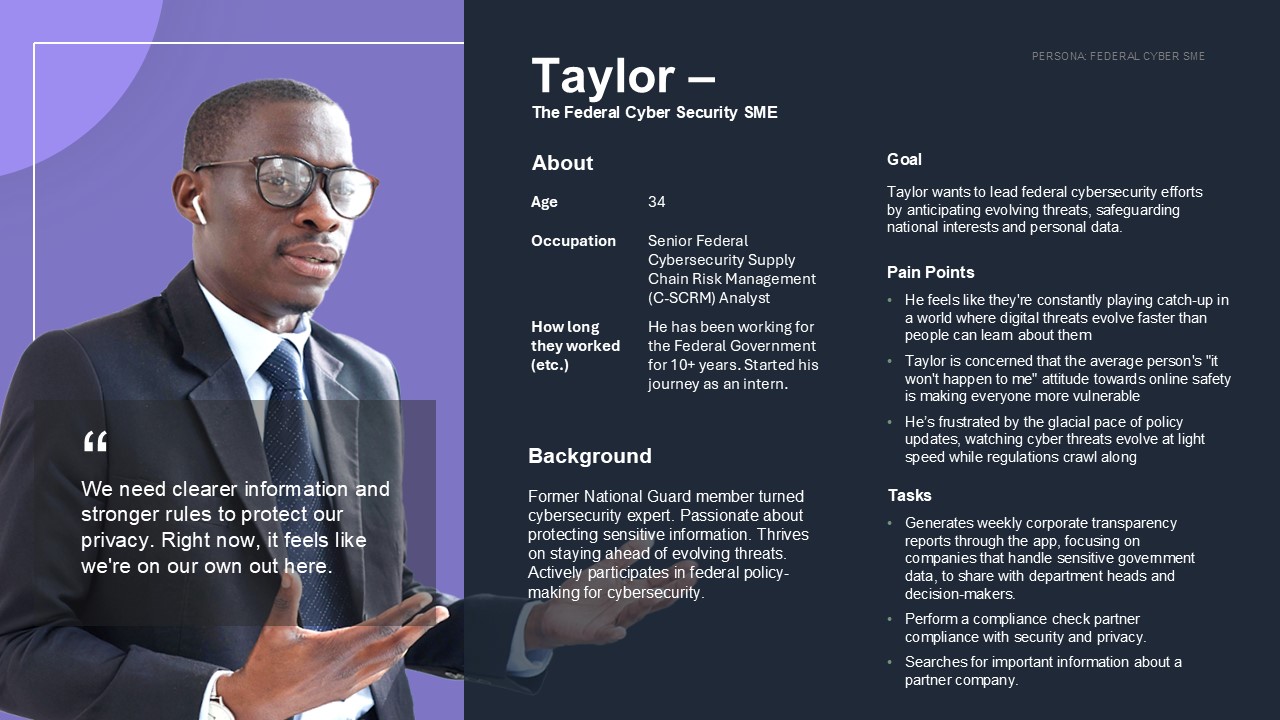
Drawing from UX interviews, screener survey data, and desk research, I synthesized the findings to create detailed user personas and journey maps. These tools helped me capture the pain points, goals, and behaviors of real users, allowing me to design Merloom with their needs in mind. The journey maps illustrate the shift from the current frustrating experience to a future state where users can confidently navigate privacy policies and corporate practices.

Design

Original Prototype

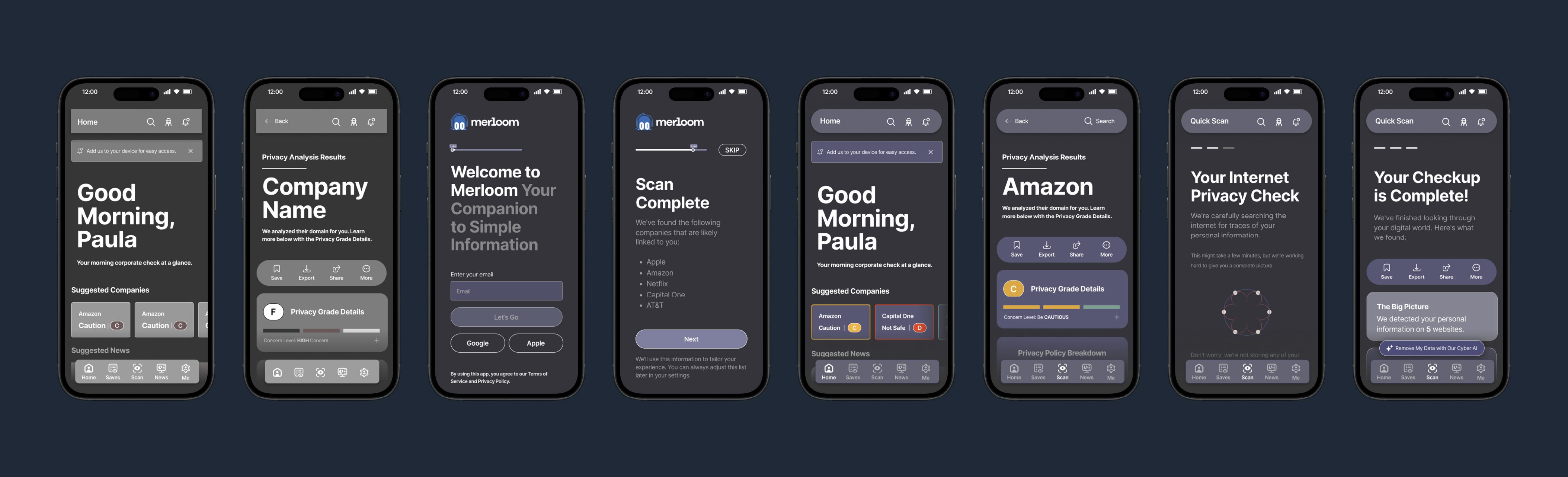
The feature set for Merloom was directly shaped by insights from our UX research. Users expressed a strong need for clarity and control over how their data is used, but often felt lost in complex legal jargon and lacked the tools to monitor company practices effectively.

Core Feature Set
Onboarding
Policy and Personal Scan
Watchlist
Deep Search

Testing

User Testing

We conducted both in-depth sit-down tests and broader Maze tests to gather comprehensive usability data.

Onboarding Challenges - Some users struggled with the onboarding process, showing that it needs to be streamlined for a smoother, more intuitive start.Core Feature

Visibility
- Many users had trouble finding the search and scan functions, indicating the need for better visibility and easier access to these essential tools.

‍Navigation Issues -  Users found it difficult to freely explore the app, suggesting a need for clearer navigation paths and more helpful visual cues.

Design

Corrected Prototype

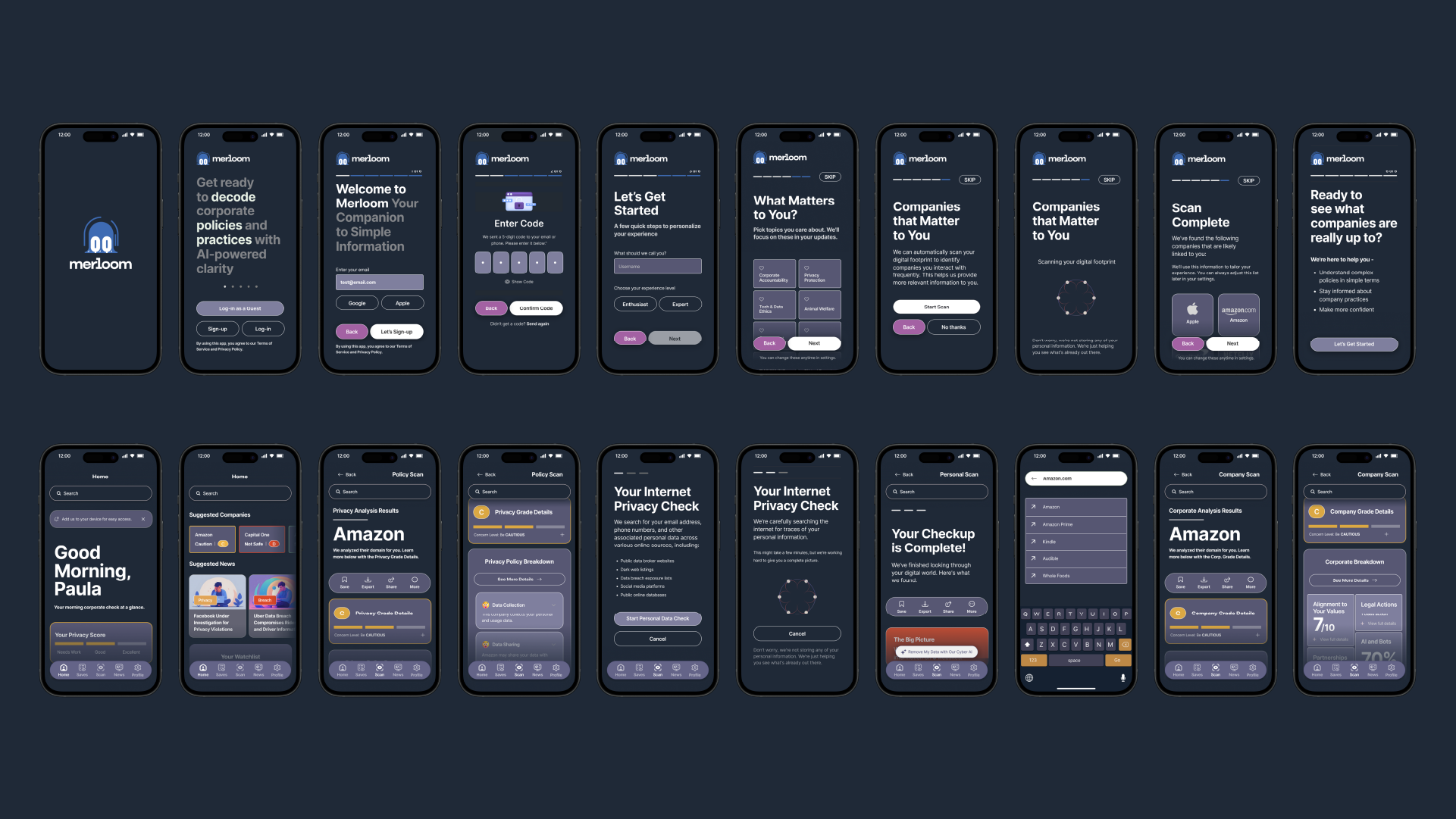
Based on user insights from testing sessions and feedback from UX SMEs, I implemented several key enhancements. I used accessibility tools to improve color contrast and adjusted the app's color scheme to enhance visibility. I also applied best practices to differentiate states within the app, making navigation more intuitive. Additionally, I focused on increasing visual consistency, creating a more cohesive and user-friendly experience.

Final Thoughts

Bridging the gap between technical complexity and user-friendly interfaces

The
research showed a clear need for tools that can translate complex technical information into user-friendly formats. By leveraging AI and advanced automation, we can bridge this gap, making intricate corporate policies and cybersecurity concepts accessible to a broader audience.